

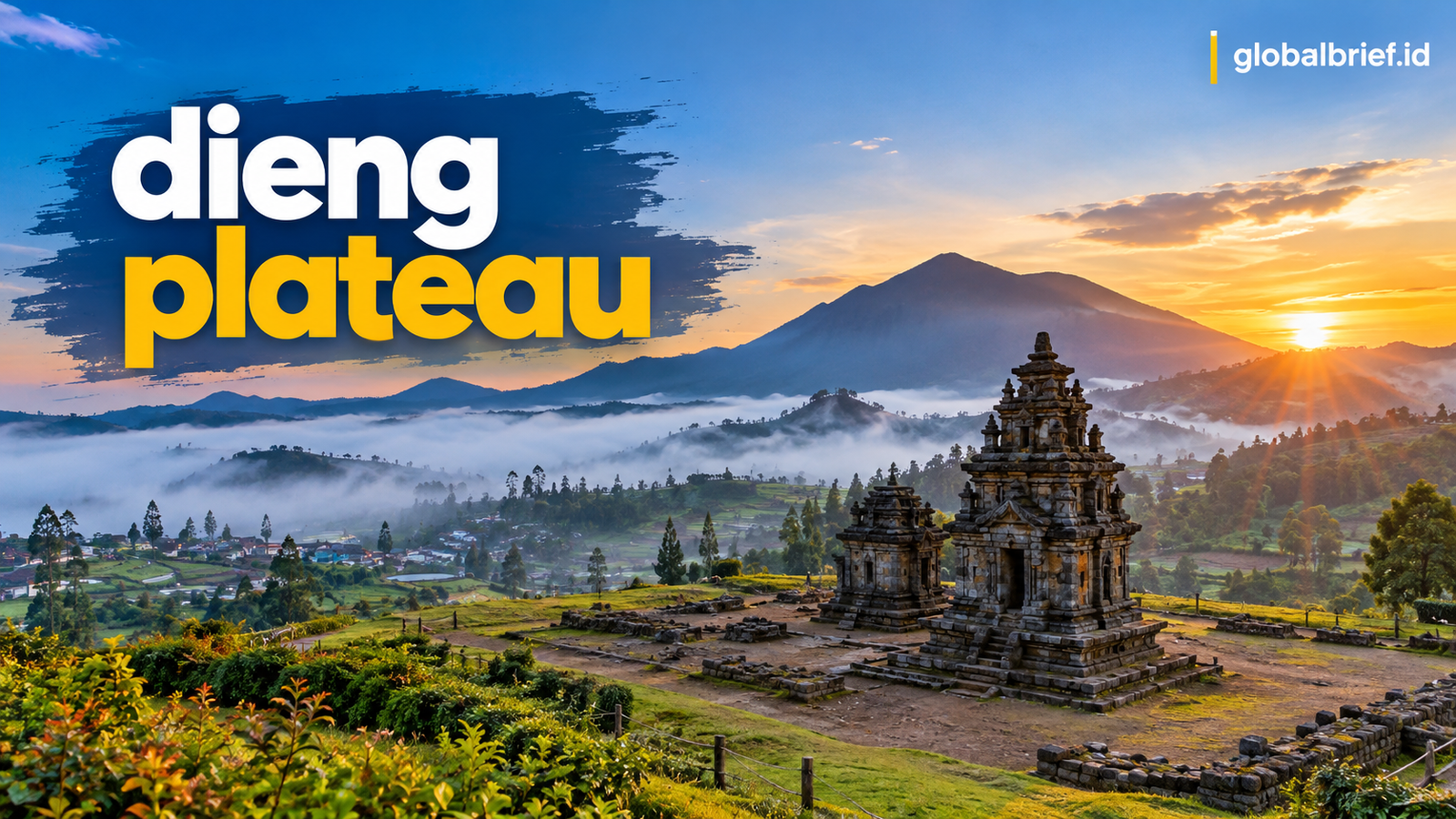
The Dieng Plateau is one of Indonesia’s most fascinating highland destinations, offering a remarkable combination of volcanic landscapes, ancient Hindu temples, colorful lakes, and traditional village life. Located in Central Java, this beautiful region sits high above sea level, where cool mountain air, rolling green hills, and drifting morning mist create an unforgettable atmosphere. For travelers seeking a quieter alternative to Indonesia’s busy tourist destinations, Dieng offers natural beauty, cultural heritage, and opportunities to experience local life.
Often called the Land Above the Clouds, the plateau attracts visitors who enjoy mountain scenery, photography, history, and outdoor exploration. Its volcanic origins have shaped the landscape, leaving behind steaming craters, mineral-rich waters, and unusual geological formations. At the same time, centuries-old temples reveal the area’s importance in Indonesia’s early Hindu history. Whether you are planning a weekend escape or a longer Central Java journey, Dieng provides a rewarding experience for curious travelers.
Where Is Dieng Plateau?
The Dieng Plateau lies in the highlands of Central Java, Indonesia, mainly within the Wonosobo and Banjarnegara regencies. It stands approximately 2,000 meters above sea level in many of its popular visitor areas, although the elevation varies across the wider region. Its high position gives Dieng a much cooler climate than the tropical lowlands of Java.
The journey to Dieng often takes travelers through winding mountain roads, terraced farmland, small villages, and hills covered with cultivated crops. Potatoes, vegetables, and other cool-weather crops are important parts of the local agricultural economy. These fields create striking patterns across the slopes, especially when viewed from elevated viewpoints.
Wonosobo is a common starting point for visitors traveling to the plateau. From there, travelers can continue by private car, hired driver, motorcycle, or local transport, depending on their plans. Road conditions and journey times can vary, so allowing extra time is helpful, particularly during rainy weather or busy holiday periods.
The Natural Beauty of Dieng
Rolling Hills and Mountain Views
One of the first things visitors notice about Dieng is its dramatic scenery. Green hills rise around agricultural valleys, while clouds frequently move across the landscape. Early mornings can be especially beautiful, when sunlight gradually illuminates the mountains and mist settles between the ridges.
The landscape changes throughout the day. Clear weather may reveal distant peaks and broad views of the surrounding countryside, while passing clouds create a mysterious atmosphere. Photographers often visit before sunrise to capture the changing light, although visibility depends on the weather.
Walking around the villages and cultivated hills can also provide a closer look at everyday life. Visitors may see farmers tending their fields, preparing crops, or transporting produce along narrow rural roads. These ordinary scenes are an important part of Dieng’s character and make the destination more than simply a collection of tourist attractions.
Colorful Lakes and Volcanic Craters
Dieng is known for its unusual lakes and geothermal features, which reflect the area’s volcanic origins. Telaga Warna, meaning Color Lake, is among its best-known natural attractions. Under suitable lighting and viewing conditions, the water may display different shades because of mineral content, reflections, and changing environmental conditions.
Nearby Telaga Pengilon offers a contrasting landscape, with generally clearer-looking water and a different visual character. Walking between the lakes allows visitors to appreciate the surrounding forest, hills, and viewpoints. The colors of the lakes are not guaranteed to appear equally vivid every day, so it is best to enjoy the entire landscape rather than expect a particular photographic effect.
Another notable attraction is Sikidang Crater, an active geothermal area where steam rises from the ground and bubbling mud demonstrates the energy beneath the surface. Visitors should remain within designated paths and observation areas because volcanic gases, hot ground, and boiling water can be dangerous. Following local safety instructions is essential when exploring any geothermal site.
Ancient Temples and Cultural Heritage
The Arjuna Temple Complex
The Arjuna Temple Complex is one of the most important historical attractions in Dieng. These Hindu temples are generally associated with the early medieval period, with their origins commonly dated to around the eighth and ninth centuries. Their presence demonstrates the historical influence of Hindu religious traditions in Central Java.
The stone structures are relatively modest compared with some of Indonesia’s larger temple complexes, yet their setting gives them a distinctive charm. Surrounded by open fields and mountain scenery, the temples appear especially atmospheric when low clouds drift across the area.
Visitors can walk around the complex to examine the architecture, stone details, and layout. The site is also a reminder that Dieng’s significance extends beyond its natural scenery. It is a place where religious history, archaeology, and the surrounding environment come together.
The Cultural Meaning of Dieng
The name Dieng is often explained through a traditional interpretation connected with divine or sacred places, although the precise linguistic history is not entirely settled. The area’s temples, local customs, and continuing religious associations contribute to its cultural importance.
Dieng is also known for its distinctive local traditions. The annual Dieng Culture Festival has become a major cultural event, featuring artistic performances, community celebrations, and ceremonies associated with the region’s heritage. One of its best-known traditions involves the cutting of the naturally matted hair of certain local children, a ceremony understood within the community’s cultural and spiritual beliefs.
The festival’s schedule and program can change, and it may attract substantial crowds. Travelers interested in attending should confirm the dates and arrangements before planning their visit.
Best Places to Visit in Dieng
Sikunir Hill
Sikunir Hill is a popular destination for sunrise views. Visitors generally begin the climb before dawn to reach a suitable viewpoint as daylight spreads across the mountains. On clear mornings, the surrounding peaks create a memorable panorama.
The walk involves an uphill trail, so comfortable shoes, a flashlight, warm clothing, and sufficient drinking water are useful. Sunrise visibility depends on cloud cover and weather conditions, meaning that a spectacular view cannot be guaranteed on every visit.
Batu Pandang Ratapan Angin
Batu Pandang Ratapan Angin is a well-known viewpoint overlooking the lakes and surrounding highlands. Its elevated position makes it a favorite location for landscape photography. Visitors should use established viewing areas and avoid risky positions near steep edges, especially when the ground is wet.
Local Villages and Agricultural Landscapes
Exploring the villages around Dieng offers a different perspective on the destination. Small shops, traditional food stalls, vegetable farms, and local markets reveal how people live in this cool mountain environment. Travelers can also learn about the region’s agricultural products and the challenges of farming on steep terrain.
Respectful behavior is important when visiting residential areas or taking photographs of local people. Asking permission before photographing someone helps create a more considerate travel experience.
Local Food and Highland Life
Dieng’s cool climate influences its everyday food and hospitality. Visitors can warm up with bowls of traditional soup, freshly prepared noodles, and hot drinks sold at roadside stalls. Local potato-based snacks are also popular because potatoes are widely cultivated in the surrounding highlands.
One regional specialty is carica, a fruit related to papaya that grows in suitable highland conditions. It is commonly prepared as a sweet preserved fruit and sold in jars or packaged containers. Travelers looking for edible souvenirs may find it an appealing way to experience local flavors.
Simple guesthouses and family-run accommodations allow visitors to experience the region at a slower pace. Staying overnight can be worthwhile because it provides more time to explore the temples, lakes, and viewpoints without rushing between attractions.
Best Time to Visit Dieng Plateau
The dry season, generally from around May to September, is often a convenient period for exploring Dieng because rainfall may be lower and outdoor activities can be easier to arrange. However, weather patterns vary from year to year, and mountain conditions can change quickly.
The rainy season can bring lush vegetation, dramatic clouds, and fewer opportunities for uninterrupted views. Trails may become slippery, and heavy rain can affect road travel. Checking local weather forecasts before departure is therefore important.
Temperatures can fall significantly at night and before sunrise. Frost occasionally occurs in the highlands during particularly cold, dry conditions, especially in the colder months. Warm layers, a wind-resistant jacket, and suitable footwear make early-morning excursions more comfortable.
Travel Tips for a Comfortable Visit
Planning ahead helps travelers make the most of Dieng. Start early if you want to visit several attractions, especially if sunrise photography is part of your itinerary. Distances between sites, parking arrangements, walking routes, and changing weather can all affect the day’s schedule.
Carry cash for small purchases and local entrance fees where applicable, and confirm current prices and opening arrangements before visiting. Mobile connectivity can vary in mountainous areas, so saving important directions in advance may be useful.
Because Dieng includes active geothermal features, visitors should never cross safety barriers, touch hot water, or approach steaming vents outside designated areas. Staying on marked paths protects both travelers and the fragile environment.
It is also worth choosing local guides or community-based services when practical. Their knowledge can add context to the temples, traditions, and agricultural landscape while helping tourism support the surrounding communities.
Conclusion
The Dieng Plateau offers a distinctive side of Indonesia, where ancient Hindu temples stand among volcanic craters, colorful lakes, green farmland, and mist-covered mountains. Its cool climate, cultural traditions, and striking viewpoints make it an appealing destination for travelers interested in both nature and history.
From watching sunrise at Sikunir Hill to exploring the Arjuna Temple Complex and discovering the local flavors of the highlands, every experience provides a different understanding of the region. A thoughtful itinerary, suitable clothing, and respect for local customs can make the journey more comfortable and meaningful. For anyone exploring Central Java, Dieng is a highland destination worth discovering at a relaxed pace.
Frequently Asked Questions
What is Dieng Plateau famous for?
Dieng is famous for its ancient Hindu temples, volcanic craters, Color Lake, mountain viewpoints, cool highland climate, and distinctive local cultural traditions.
Where is Dieng Plateau located?
It is located in Central Java, Indonesia, primarily across the highland areas of Wonosobo and Banjarnegara regencies.
How many days are enough to explore Dieng?
One full day allows visitors to see several major attractions, but a two-day visit offers more flexibility for sunrise trips, temple exploration, local food, and village experiences.
Is Dieng Plateau suitable for families?
Yes, many of its attractions can be enjoyed by families. However, some locations involve uphill walks, uneven paths, cold temperatures, or geothermal hazards, so activities should be chosen according to each person’s abilities.
What should visitors wear in Dieng?
Warm layers, a jacket, comfortable walking shoes, and rain protection are recommended. Early mornings and evenings can be particularly cold compared with Indonesia’s lowland destinations.
Can visitors see sunrise at Sikunir Hill throughout the year?
Sunrise excursions are possible during much of the year, but visibility depends on weather conditions. Clearer skies may improve the chances of mountain views, while clouds or rain can obscure the scenery.
Is Dieng Plateau an active volcanic area?
Yes. The region contains geothermal features associated with volcanic activity, including Sikidang Crater. Visitors should follow local instructions and remain in authorized viewing areas for safety.